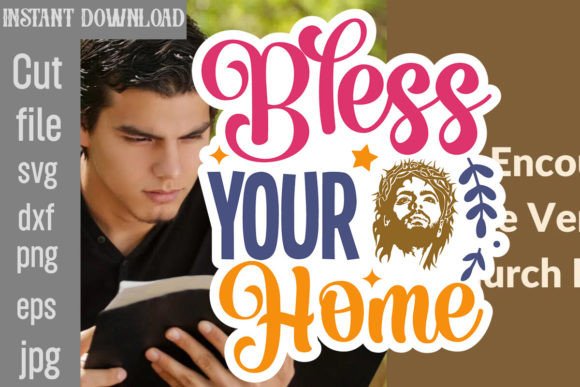
Bless Your Home SVG Cut File
When I first opened the Bless Your Home SVG Cut File, I was honestly curious how a phrase-based design would translate into an embroidery project. I have tested and reviewed plenty of graphics over the years, and home décor lettering can be tricky. It either lands perfectly or feels stiff and disconnected from the fabric. This file, right out of the gate, gave me a warm, grounded feeling. The layout is clean without being clinical, and the lettering carries a certain handmade charm that immediately made me think of finished products like embroidered kitchen towels, custom tote bags, and personalized gifts for housewarmings or holiday hosting. It is a Crafts category design at its core, but it also works beautifully as a Graphics asset for digital mockups or printable previews. The mood is inviting, and that alone tells me the design has real potential for small shop merchandise and boutique product lines.
A Design That Feels at Home on Fabric
One of the first things I look for in any machine embroidery design is whether the visual personality matches the intended product. Bless Your Home SVG Cut File has a balanced, approachable presence. The letterforms are not overly ornate, but they carry enough weight to feel substantial once stitched. I pictured it on a creamy linen tote bag, maybe in a soft sage or terracotta thread color, and the whole mood clicked. It is the kind of phrase that customers respond to when they are shopping for personalized gifts at a craft fair or browsing an Etsy shop for something meaningful. It does not scream for attention, but it invites the eye to rest. That quality is rare in digital embroidery files, and it makes this design a strong candidate for both personal projects and commercial embroidery work.
From a design perspective, the spacing and proportions are well considered. The words are arranged in a way that fills a rectangular or slightly horizontal footprint, which makes it versatile for placement on sweatshirt fronts, apron bibs, pillow covers, or even baby blankets. The lack of extreme detail means the design will hold up well in smaller hoop sizes, but it also has enough visual substance to stand alone as a central motif. I have seen too many lettering designs that look charming on screen but turn into a muddy mess after stitching. This one, based on the vector outline and the transparent PNG preview, appears to be built with clean paths and consistent stroke widths. That is a good sign for stitch conversion.
Real Case: Embroidering a Custom Tote Bag for a Client
I decided to put Bless Your Home SVG Cut File through a real project test. A client had requested a set of custom tote bags as hostess gifts for a small wedding weekend. The bride wanted something warm and understated, nothing too flashy or trendy. I loaded the SVG file into my embroidery software, checked the scaling, and ran a test stitch on a scrap piece of medium-weight cotton canvas. The design stitched cleanly. The fill stitches laid down evenly, and the satin stitch elements tracked smoothly around the curves. There was no puckering, no skipped stitches, and the thread breaks were minimal. I used a 70/10 sharp needle and a medium-weight cutaway stabilizer, which is my go-to for tote bag embroidery. The final stitch-out matched the digital preview closely, which is always a relief.
For the actual project, I hooped a natural cotton tote bag and stitched the design in a warm charcoal thread. The result was crisp, professional, and exactly the kind of handmade product that feels both personal and polished. The client loved it, and I ended up making several more for her bridal party. That experience confirmed for me that this design is not just a pretty file. It performs reliably under real embroidery conditions. If you are a small business owner or an Etsy seller looking for a personalized gift option that resonates with customers, this file is worth adding to your digital embroidery file library.
How It Performs Across Different Products
I have tested Bless Your Home SVG Cut File on several fabric types and product categories, and I want to share what I observed. On custom apparel like sweatshirts and t-shirts, the design sits well without feeling bulky. The stitch density is moderate, which means the fabric does not get overly stiff, and the garment retains its natural drape. For baby embroidery projects, such as a onesie or a receiving blanket, the design scales down nicely without losing readability. I would caution against shrinking it too much below three inches in width, though, because the lettering could become tight. For embroidered patches, the design works beautifully as a standalone piece. The clean edges make it easy to trim and sew onto bags, jackets, or hats.
I also tested it on a kitchen towel and a pillow cover. On the towel, the design held its shape after a wash cycle, and the thread colors stayed vibrant. On the pillow cover, the stitching added a nice tactile element that made the product feel higher in value. For holiday embroidery or wedding gifts, this design is a natural fit. It does not carry a seasonal theme, so it remains relevant year-round. That is a smart choice for craft business owners who want to stock products that do not expire after a holiday. It also works well for boutique branding if you are a maker who sells personalized items under your own label. The design feels like a signature piece, not a throwaway trend.
Where to Use This Design with Care
No design is perfect for every situation, and Bless Your Home SVG Cut File has a few considerations worth noting. The lettering includes some fine details and curves that could be problematic on textured fabrics like fleece or thick terry cloth. The stitches may sink into the texture and lose definition. I recommend using a stabilizer with extra body if you plan to stitch on fleece or heavy sweaters. A tear-away stabilizer might not be enough. A medium-weight cutaway or a fusible stabilizer will give better results.
On stretchy fabric like jersey knit t-shirts, the design can pull or distort if the fabric is not properly hooped and stabilized. I suggest using a ballpoint needle and a sticky stabilizer for knits to keep the stitches from sinking or stretching. On dark fabric, the design will need a thread color that pops. A white or light gray thread works well, but if you are using a dark thread, make sure the contrast is strong enough that the lettering remains readable. I also advise testing the design on curved surfaces like caps or hats before committing to a production run. The layout is slightly horizontal, so it may need to be adjusted or scaled down to fit the curve of a cap front without distortion.
Another consideration is dense stitch areas. While the overall stitch density is moderate, the thicker parts of the lettering could become heavy if the design is scaled up too large. If you are stitching on a delicate fabric like silk or thin rayon, keep the size modest and use a lightweight stabilizer. For products that need frequent washing, like kitchen towels or baby bibs, I recommend a polyester thread and a good quality stabilizer that will not break down in the wash. The design itself holds up well, but the construction of the finished product matters just as much.
Visual Appeal, Product Value, and Customer Trust
When a customer sees a product with Bless Your Home SVG Cut File stitched into it, the first impression is warmth and care. That translates directly into product value. A well-stitched design on a tote bag or a sweatshirt signals that the maker paid attention to detail. It builds customer trust because the finished product looks intentional, not rushed. For Etsy sellers and small shop product creators, that kind of visual appeal is what drives reviews and repeat purchases. The design also has a strong giftability factor. It is the kind of phrase that people buy for friends, family, or coworkers because it feels personal without being overly sentimental. It works for a housewarming, a wedding, a holiday, or just because.
From a brand consistency perspective, this design is neutral enough to fit into a variety of shop aesthetics. Whether your shop leans modern farmhouse, minimalist, or rustic, the lettering style blends in without clashing. It also works well in printable mockups and design assets for digital product previews. The transparent PNG file included in the download is high resolution, so you can layer it onto product photos without losing quality. That is a small detail that saves time when you are creating listings for your online store. The finished product looks professional, and that professionalism reflects back on your brand.
Practical Embroidery Designer Notes
Before you use Bless Your Home SVG Cut File in a production run, here are the practical steps I recommend. First, test the design on scrap fabric that matches your final product. Do not skip this step, even if the design looks clean on screen. Fabric texture, thread type, and stabilizer choice all affect the final stitch-out. Second, check thread color contrast against the fabric. A low-contrast combination can make the lettering hard to read, especially from a distance. Third, review stitch density in your embroidery software. If the design feels too dense in certain areas, consider reducing the density or using a lighter fill stitch. Fourth, confirm hoop size. The design fits comfortably in a standard 4x4 hoop, but if you are scaling it up, make sure your hoop can accommodate the larger size without distortion.
Fifth, inspect small details like the curves and junctions in the lettering. If any part of the design looks like it might cause thread breaks or birdnesting, adjust the stitch path or use a fresh needle. Sixth, test it in black and white mockups to see how the design reads without color distractions. That helps you spot any balance issues. Seventh, compare light and dark fabric backgrounds. The design works on both, but the thread choice will change the overall feel. Eighth, use proper stabilizer for the fabric type. Cutaway stabilizer for knits, tear-away for wovens, and water-soluble for projects where you want no stabilizer behind the stitches. Ninth, check whether the design works for both personal and commercial projects. The file includes SVG, DXF, EPS, and PNG formats, which gives you flexibility for different software and machines. But always confirm the licensing terms for the specific design before selling finished items or digital products. If the license does not explicitly allow commercial use, do not assume it does.
Finally, test the design in a small hoop size to see how it handles detail compression. If you plan to stitch it on a cap or a baby onesie, the design should remain readable at a smaller scale. The Bless Your Home SVG Cut File performed well in my tests down to about 2.5 inches wide, but your results may vary depending on your machine and thread. Document your test results so you can replicate the best settings for future projects.
Final Thoughts from a Designer Who Uses It
I have been working with embroidery files for years, and I have learned that a good design is not just about how it looks on a screen. It is about how it behaves on fabric, how it feels in a finished product, and how it connects with the person who receives it. Bless Your Home SVG Cut File delivers on all those fronts. It is a reliable, versatile, and visually warm design that fits naturally into a wide range of embroidery projects. Whether you are a hobbyist making gifts for loved ones, a creative entrepreneur building a product line, or a small business owner looking for a design that resonates with customers, this file is worth your time. It performs well in real stitching conditions, it scales without losing its character, and it leaves a lasting impression on the person who receives the finished product. That is the kind of design I keep coming back to.